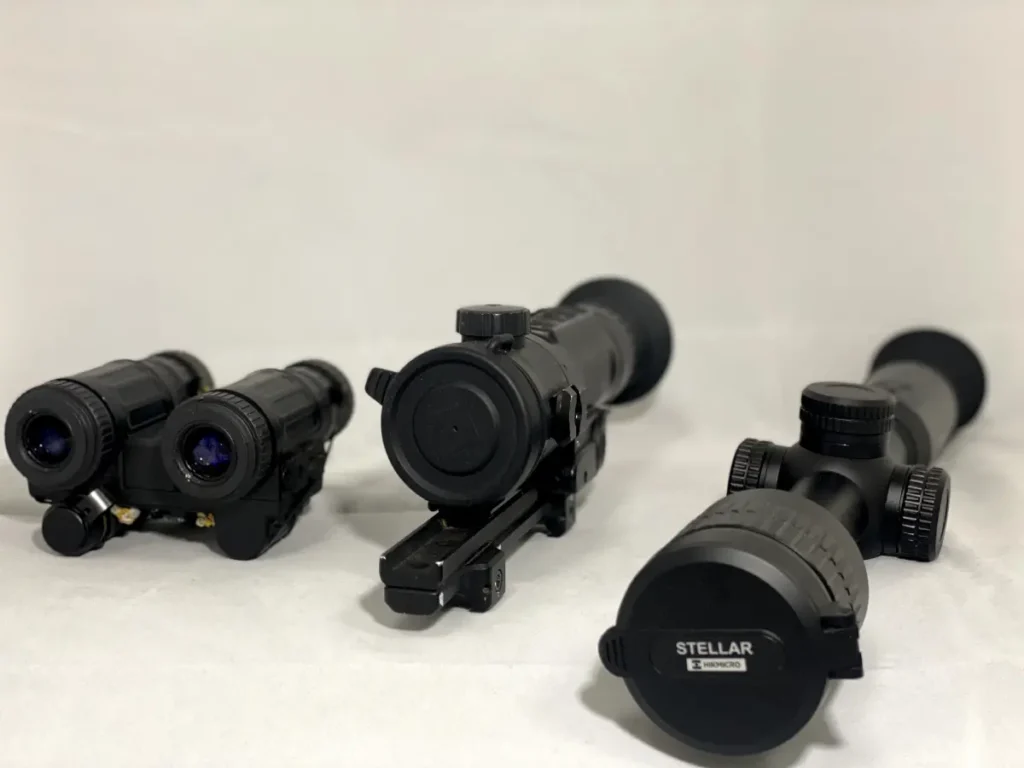
Optical devices are not just tools, they are real masterpieces of engineering thought. Their accuracy, reliability and functionality make them indispensable assistants in many areas of life. However, like any fine instrument, optics require careful maintenance.
In order for optical devices to serve you for a long time and without failure, it is important to follow certain rules for their storage and use. Our engineers shared five key tips that will help keep your optics in perfect condition for years to come.
5 tips from our engineers
1. Safe transportation
The sun is a source not only of light and heat, but also of harmful ultraviolet radiation. Under the influence of UV rays, field diaphragms, matrices and displays deteriorate.
The sun’s rays are especially dangerous for night vision devices. Their electro-optical converters require double protection, as damage can occur from both the front and back sides. Therefore, never leave night vision devices in the sun with open covers, and transport them only in special cases.
2. Correct lens cleaning
Lenses are the “eyes” of your optical devices and should be treated with special care. Never wipe them with your fingers, because dirt and grease are always present on them, which can damage the special illumination of the lenses. Do not use handkerchiefs, items of clothing or towels for cleaning – this can lead to scratches.
It is best to use special microfiber napkins that do not leave lint. Moisten a tissue with distilled water or a special solution for cleaning optics and gently wipe the lenses, moving in a circular motion. Do not press too hard to avoid damaging the optical elements.
3. Removal of dirt
If dust or other small dirt appears on the lens, do not rush to wash it off. Allow the dirt to dry, then gently remove it with a soft brush or cotton swab.
If the dirt does not want to lag behind, you can use a syringe with distilled water. But remember that this is permissible only for devices with IP57 protection, that is, those that are resistant to water splashes. For other devices, the use of water can damage electronic components.
4. Avoid temperature changes
Sudden temperature changes are harmful not only for humans, but also for optics. Do not bring a cold device into a warm room without a special case or cover. The temperature difference can lead to fogging of the lenses from the inside, which negatively affects the quality of the image.
Also, avoid placing the appliance near heat sources such as fireplaces, heaters or stoves. Excessive heat can damage the optical properties and cause deformation of the case.
5. Storage of optical devices
Correct storage is the key to long-term service of your optical devices. Here are some tips that will come in handy:
Always store optics in special cases or cases. Usually, they are included with the device, but if not, then you are welcome to purchase it separately.
Store optical instruments in a dry, cool and well-ventilated area. Avoid places with sudden temperature changes and high humidity. Also, do not store optics near windows.
Remove the batteries. If your optical device is powered by batteries, be sure to remove them before long-term storage. Over time, batteries can discharge and leak, which will damage the electronic components of the device.
By following these simple tips, you can ensure the reliable operation and longevity of your optics. Remember that proper care is the guarantee that your optical devices will retain their properties for many years. We recommend that you save this article and share it with those who may find it useful.